Audio-Technica AT-LPA2 Review Analysis: What the MC Cartridge Package Really Requires
Editorial note: This research-based analysis combines an archival professional review with current official documentation. It is not a new hands-on test by 7Review. Price and availability should be checked in your region before buying.
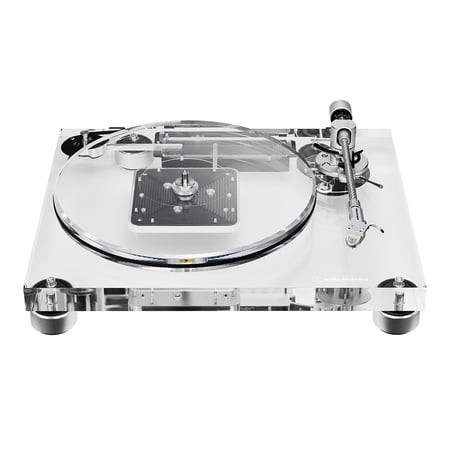
The Audio-Technica AT-LPA2 looks unusually complete for a high-end turntable. Its transparent acrylic construction makes an immediate impression, while the supplied AT-OC9XEN moving-coil cartridge removes one purchasing decision from the process. But “cartridge included” does not necessarily mean “ready for every system.”
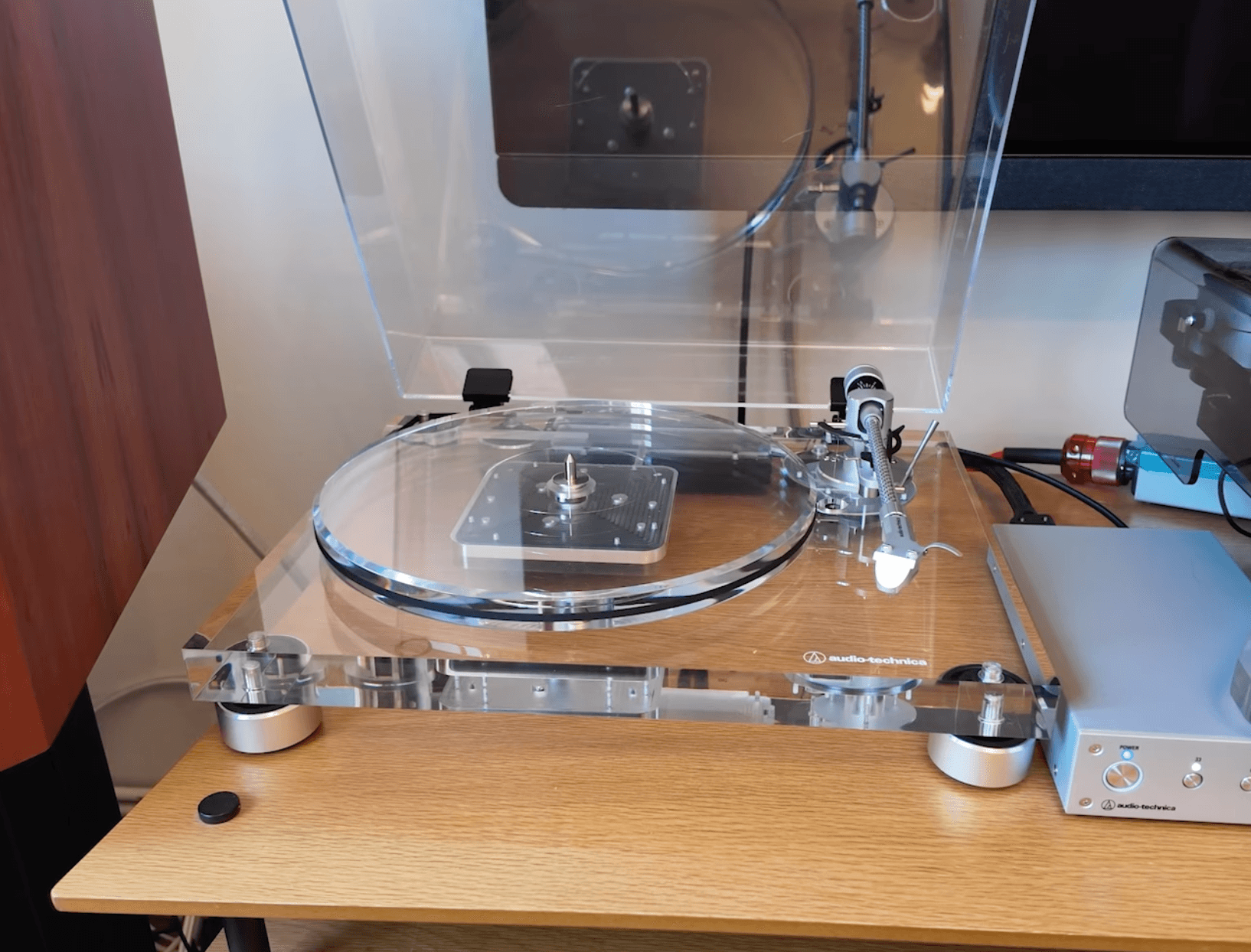
The cartridge’s low output, the separate control unit and the turntable’s adjustment options all affect what you need around it. That makes the AT-LPA2 more interesting as a system-planning question than as another exercise in describing acrylic, carbon fibre and sound quality.
Verdict
The AT-LPA2 makes the most sense for a vinyl listener who wants a carefully specified turntable-and-cartridge package and already owns—or is prepared to buy—a suitable moving-coil phono stage. Its adjustable tonearm and two counterweight configurations also leave room for future cartridge changes.
It is a less convincing choice for someone expecting a simple connection to an amplifier’s standard moving-magnet input. The separate controller also needs its own shelf space, and the non-user-replaceable stylus makes long-term cartridge servicing worth investigating before purchase.
In short, this is a potentially attractive route into serious vinyl playback, but only after checking the rest of the system. The included MC cartridge is a major part of the value proposition and the main reason setup planning matters.

What the AT-LPA2 package includes
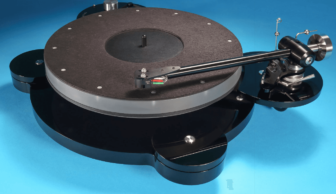
According to the official AT-LPA2 manual, this is a two-speed belt-drive turntable supporting 33⅓ and 45rpm. It uses a 20mm acrylic platter and a straight carbon-fibre tonearm with an effective length of 223.6mm.
The supplied AT-OC9XEN is a moving-coil cartridge with a nude elliptical stylus, an aluminium cantilever and a stated output of 0.35mV. Audio-Technica specifies a recommended load impedance of at least 100 ohms and a tracking-force range of 1.8g to 2.2g, with 2.0g as the standard setting.
The box also includes the separate control unit, dust cover, light and heavy counterweights, standard and auxiliary anti-skating weights, headshell, cables and setup accessories. This is therefore more complete than a bare turntable sold without a cartridge, but it still relies on compatible electronics downstream.
The MC phono-stage question
The most important pre-purchase check is not whether your amplifier has an input marked “phono.” It is whether that input can handle a low-output moving-coil cartridge.
Many integrated amplifiers and entry-level phono stages accept moving-magnet cartridges only. The AT-OC9XEN’s 0.35mV output is much lower than the output normally associated with an MM design. A compatible system therefore needs an MC-capable phono input with appropriate gain and loading, or a suitable step-up solution feeding an MM stage.
The manual’s minimum 100-ohm load recommendation is useful, but loading alone does not answer the whole compatibility question. Gain, input noise and available settings also matter. Before buying, check the phono-stage documentation rather than assuming that any “MC” label guarantees the ideal match.
This is where the AT-LPA2 can create an expense that is easy to overlook. The cartridge is included, but the electronics required to use it properly may not be.
Setup and cartridge flexibility
Audio-Technica provides two counterweight configurations. The official supported cartridge-mass ranges are 6.1–9.2g with the light counterweight and 9.2–13.9g with the heavy counterweight, excluding the headshell. The anti-skating mechanism also uses separate standard and auxiliary weights.
Those ranges suggest that the arm is not restricted to the supplied cartridge. Tonearm height can be adjusted from −1.5mm to +7mm with the included AT-OC9XEN as the reference, while tracking force can be adjusted from 0g to 3.0g. These features give an experienced owner useful scope for fitting another compatible cartridge later.
Flexibility does not eliminate setup work, however. Changing a cartridge can require checking mass, alignment, tracking force, anti-skating, arm height and phono-stage compatibility. The included cartridge avoids much of that decision-making on day one, which is one of the package’s practical strengths.
The archived professional review reported that the anti-skating arrangement was straightforward to calibrate. That is an attributed observation from the original test, not a fresh setup assessment by 7Review.
The external controller changes placement
The turntable body measures approximately 420 × 340 × 135mm and weighs about 8.4kg. Those figures alone make it reasonably easy to assess whether it fits a rack. The separate controller complicates the calculation slightly: it measures approximately 133 × 228 × 50mm and weighs about 1.1kg.
The controller handles power and speed selection away from the main plinth. The design rationale is to keep its electrical components separate from the turntable, but the practical consequence is another box that needs ventilation, a stable position and sensible cable routing.
It does not necessarily require a second shelf; that depends on the available width and the cable arrangement. Buyers should nevertheless plan for both components rather than measuring only the turntable footprint.
The transparent plinth creates another practical consideration. The supporting surface remains visible through the deck, so the rack or isolation platform becomes part of the visual presentation. That is not an acoustic claim, but it may matter to anyone attracted by the AT-LPA2 primarily for its appearance.
What the archived review found
The original reviewer checked rotational speed with a strobe disc and reported accurate operation at both supported speeds, with no audible wow or flutter during the listening assessment. Audio-Technica separately publishes a wow-and-flutter specification below 0.12% WRMS at 33rpm. These are two different forms of evidence: one is an archived reviewer observation, and the other is a manufacturer specification.
The archived listening notes described controlled, extended bass and accurate midrange reproduction from the AT-LPA2 and AT-OC9XEN pairing. Piano and vocal material were among the examples used in the review. Those findings help describe the original reviewer’s experience, but they should not be read as independent measurements or a new listening verdict from 7Review.
This distinction matters because the most defensible conclusion is not that the turntable will sound identical in every system. Cartridge loading, phono-stage gain, support furniture, setup accuracy and the rest of the playback chain can all influence the result.
AT-LPA2 or Technics SL-1200GR2?
The Technics SL-1200GR2 offers a useful contrast in purchasing philosophy. It uses direct drive, supports 33⅓, 45 and 78rpm, and lists a 230mm tonearm. Technics publishes wow and flutter of 0.025% WRMS.
Those figures should not be treated as a direct listening comparison. The products use different drive systems and are sold around different cartridge decisions. The AT-LPA2 arrives with the AT-OC9XEN MC cartridge as a central part of the package, whereas the Technics specification page does not list a cartridge among the supplied accessories.
The Audio-Technica therefore offers a preselected turntable-and-cartridge combination, while the Technics gives the buyer more responsibility for choosing the cartridge. One approach is not universally better:
- Choose the AT-LPA2 approach if the included MC cartridge appeals to you and your phono electronics are ready for it.
- Consider the Technics approach if direct drive, 78rpm support or selecting your own cartridge matters more.
- Compare current regional prices only after accounting for the cartridge and phono-stage equipment each system still requires.
For Audio-Technica brand context at a simpler tier, see our Audio-Technica AT-LPW40WN review. It is not a direct performance or price rival to the AT-LPA2.
Maintenance and long-term ownership
The AT-OC9XEN’s stylus assembly is not designed as a simple user-replaceable part. That makes the current moving-coil exchange or servicing policy important to long-term cost. Availability and pricing can vary by region, so this should be confirmed with Audio-Technica or an authorised dealer rather than inferred from an older policy.
The turntable manual also identifies a dedicated replacement belt for the AT-LPA2. That is useful from a serviceability perspective, although buyers should still check local parts availability.
The dust cover protects the deck between sessions. This research does not establish whether it is preferable to play records with the cover open, closed or removed, so owners should follow Audio-Technica’s operating guidance and consider the behaviour of their particular installation.
Who should shortlist it?
The AT-LPA2 deserves a place on the shortlist if you:
- want a premium belt-drive turntable supplied with a serious MC cartridge;
- already have a configurable MC phono stage or understand what must be added;
- value tonearm-height adjustment and future cartridge flexibility;
- have room for the separate controller; and
- are comfortable treating cartridge servicing as part of long-term ownership.
Look elsewhere, or budget more carefully, if you:
- want a turntable that connects directly to an MM-only phono input;
- prefer a user-replaceable stylus;
- need 78rpm playback;
- want to select the cartridge independently; or
- do not have space for the controller and its cabling.
Final assessment
The AT-LPA2 is not simply an acrylic turntable with an expensive cartridge added to the box. Its appeal lies in the relationship between the belt-drive platform, adjustable carbon-fibre arm and supplied AT-OC9XEN. That relationship can reduce cartridge-selection uncertainty, but it shifts attention toward phono-stage compatibility, precise setup and future servicing.
For the right system, that is a coherent proposition. For the wrong one, the phrase “cartridge included” may conceal additional cost and complexity. Checking those requirements first is more useful than choosing solely on appearance—or on one manufacturer specification.
Audio-Technica AT-LPA2 Turntable Review
Is the new AT-LPA2 better than the AT-LP2022 limited edition turntable? Watch our review now. Link to our website: ...

Origin Live Swift Review

Founded in July 2014, 7Review is a free audio resource for beginners, and we're dedicated to helping you create the ultimate movie-watching experience right at home. We pull insights from top audio magazines and trusted industry sources to bring you well-researched, reliable reviews and tips. Whether you're a home cinema pro or just starting out, we aim to give you the info you need to make the best choices for your setup.